
Budget gaming headsets occupy a peculiar space. Too cheap, and you’re stuck with crackling audio and a mic that makes you sound like you’re calling from a submarine. Too expensive, and you’ve wandered out of budget territory entirely. The Turtle Beach Recon 70 has been threading this needle since its release, and heading into 2026, it remains one of the most consistently recommended entry-level gaming headsets across multiple platforms.
At roughly $40, the Recon 70 doesn’t try to compete with $150+ wireless flagships. Instead, it focuses on delivering solid audio, reliable build quality, and true multi-platform compatibility without the usual compromises that plague ultra-cheap peripherals. Whether someone’s upgrading from TV speakers, outfitting a second setup, or just entering PC or console gaming, understanding what this headset actually delivers, and where it doesn’t, matters more than the marketing copy.
Key Takeaways
- The Turtle Beach Recon 70 gaming headset delivers solid multi-platform compatibility across PlayStation, Xbox, Nintendo Switch, PC, and mobile devices at just $35–$45, making it the ideal entry-level option for budget-conscious gamers.
- Its lightweight 220-gram design and flip-to-mute microphone provide comfortable extended gaming sessions and clear team communication without the complexity of wireless setup or battery management.
- The 40mm neodymium drivers offer adequate audio performance for casual and competitive gaming with punchy bass, clear dialogue, and functional directional cues, though precision soundstaging falls short for advanced competitive FPS players.
- The Recon 70’s wired 3.5mm connection eliminates pairing headaches and wireless interference, but the non-detachable cable requires replacing the entire headset if damaged, a trade-off for simplicity.
- Synthetic leather ear cushions provide reasonable comfort for 3–5 hour sessions but trap heat in warm conditions; replacement cushions are affordable at $10–$15, extending the headset’s lifespan to 2–4 years.
- Compared to competitors like the HyperX Cloud Stinger and SteelSeries Arctis 1, the Turtle Beach Recon 70 gaming headset excels in value-per-dollar, making it the best choice for first-time buyers, kids’ setups, and secondary gaming stations.
What Makes the Turtle Beach Recon 70 Stand Out?
The Recon 70 isn’t trying to revolutionize gaming audio. It’s designed to be the dependable workhorse that shows up, does the job, and doesn’t break after three months of use.
Key Features at a Glance
The core specifications tell most of the story:
- 40mm neodymium speaker drivers tuned for gaming frequency ranges
- Frequency response: 20Hz – 20kHz (standard full-spectrum audio)
- Impedance: 32 Ohms (works with controllers and mobile devices without requiring dedicated amps)
- 3.5mm wired connection (no batteries, no charging, no wireless lag)
- Flip-to-mute boom microphone with clear positional feedback
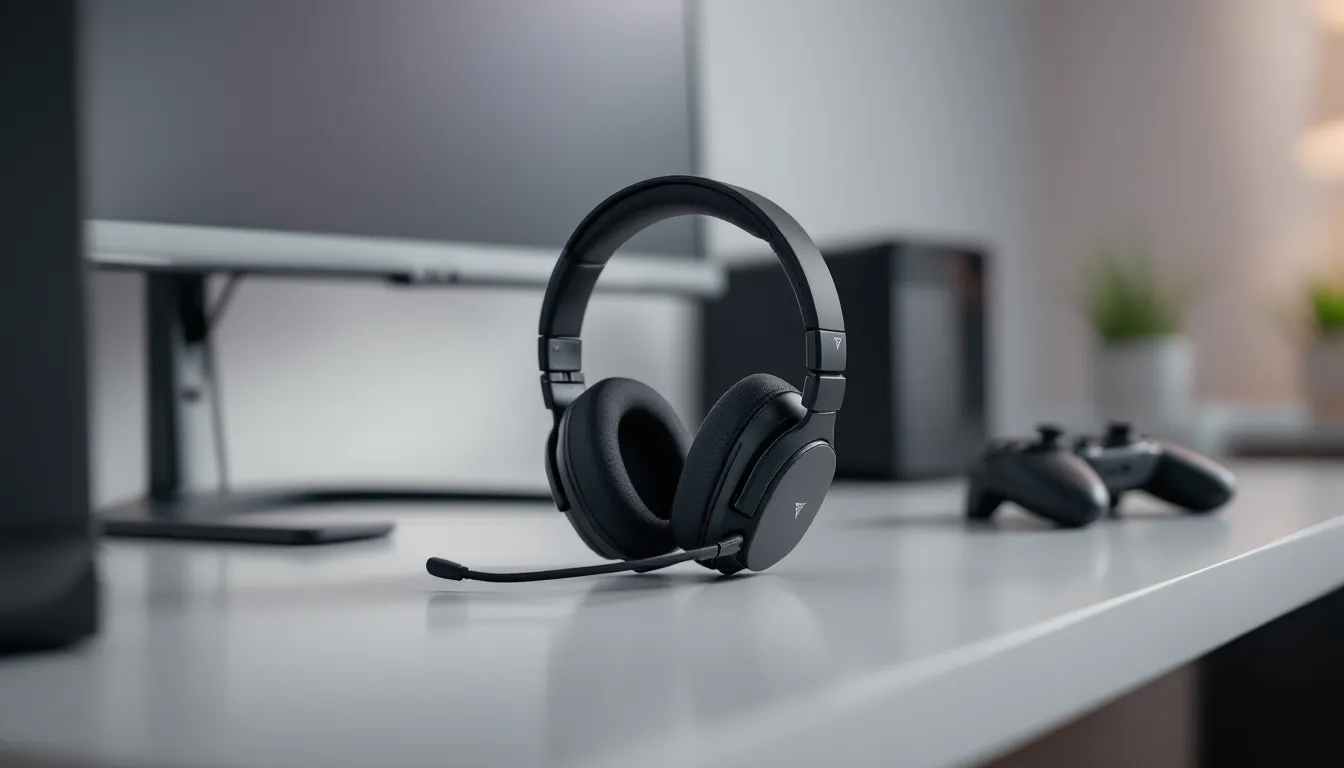
- Synthetic leather ear cushions over closed-back, over-ear design
- Weight: Approximately 220 grams
- Multi-platform support via 3.5mm jack (PlayStation 4/5, Xbox One/Series X
|
S, Nintendo Switch, PC, Mac, mobile)
Turtle Beach hasn’t drastically revised the Recon 70 formula since launch, which speaks to the original design’s effectiveness. The 2026 models maintain the same driver configuration and build approach, with only minor cosmetic tweaks depending on platform-specific variants (PS, Xbox, or universal versions share identical internals).
Who Should Consider This Headset?
This headset makes the most sense for several specific user profiles.
First-time headset buyers benefit from the low entry cost and forgiving learning curve. There’s no software to configure, no firmware updates, and no confusion about wireless pairing.
Secondary setup users, those who already own a premium headset for their main rig but need something for a bedroom console or travel setup, appreciate having a reliable backup without significant investment.
Younger gamers or parents outfitting kids’ gaming setups get a headset that won’t cause financial panic if it gets dropped, stepped on, or left in a backpack. The durability isn’t tank-level, but it’s reasonable for the price.
Casual and social gamers who prioritize party chat and basic game audio over competitive edge will find the Recon 70 handles voice communication and general soundscapes without issue. It won’t provide the precise positional audio that competitive FPS players rely on, but for most gaming scenarios, it’s more than adequate.
Design and Build Quality: Comfort Meets Durability
The Recon 70’s design philosophy is straightforward: keep it light, keep it simple, don’t add failure points.
Lightweight Construction for Extended Gaming Sessions
At 220 grams, the Recon 70 sits comfortably in the “forget you’re wearing it” category for most users. The frame uses reinforced plastic rather than metal, which skeptics might see as cost-cutting but actually contributes to the reduced weight.
Extended sessions, three to five hours without breaks, generally don’t produce the neck fatigue or pressure headaches that heavier headsets can cause. The weight distribution balances well across the headband, avoiding the “front-heavy” feel of some cheaper designs where oversized ear cups pull the headset forward.
The trade-off comes in perceived premium feel. Picking up the Recon 70 doesn’t give the same reassuring heft as an all-metal frame. It feels like what it is: a well-executed budget headset. That’s not necessarily negative, it’s honest design prioritizing function over false luxury.
Ear Cushion Comfort and Fit Analysis
The synthetic leather ear cushions measure roughly 60mm in diameter with about 20mm of depth. They’re designed as over-ear cups, though users with particularly large ears might experience some contact with the inner driver housing.
Cushion memory foam provides decent initial comfort. The material compresses over time, expect some flattening after several months of regular use, but replacement cushions are available for around $10-15.
Breathability is the primary comfort limitation. Synthetic leather doesn’t allow airflow, and during summer gaming sessions or in warmer rooms, ear cup heat buildup becomes noticeable after about 90 minutes. Mesh-covered cushions would improve this, but they’d also increase cost.
Clamping force strikes a reasonable middle ground. The headset stays secure during normal head movements and leaning back in a chair, but it’s not so tight that it causes temple pressure or leaves marks after use.
Headband Adjustability and Long-Term Durability
The adjustable headband uses a simple notched slide mechanism with clear numbered markings on each side. It extends enough to accommodate larger head sizes without maxing out the adjustment range, and the mechanism has held up well across user reports, no widespread issues with slipping or breaking.
The headband padding is minimal, just a thin layer of cushioning over the plastic frame. Users with particularly sensitive scalps might notice pressure at the crown during extended wear, though this seems less common than ear cup heat issues.
Durability concerns center on three potential failure points: the headband adjustment mechanism, the flip-up mic hinge, and the 3.5mm cable connection. The cable is permanently attached (not detachable), which means cable damage requires warranty service or replacement rather than a simple cable swap. Treating the cable gently and avoiding sharp bends near the jack extends lifespan significantly.
Audio Performance: How Does It Sound in Real Gaming Scenarios?
Audio quality makes or breaks any headset, regardless of price. The Recon 70 delivers respectable performance within its technical and financial constraints.
40mm Speaker Drivers and Sound Quality Breakdown
The 40mm neodymium drivers are tuned with a slight bass emphasis, which is typical for gaming headsets. This tuning helps explosions, gunfire, and vehicle engines feel impactful without completely drowning out mid and high frequencies.
Bass response is present and punchy enough for action games, though audiophiles will notice it lacks the depth and control of larger drivers or dedicated subwoofer configurations. Low-frequency extension doesn’t reach the true sub-bass territory, so the deepest rumbles get attenuated. For gaming purposes, this rarely matters, most game audio doesn’t rely on extreme low-end reproduction.
Midrange clarity is better than expected at this price point. Dialogue and voice chat come through clearly without excessive muddiness. The frequency balance keeps voices intelligible even during chaotic combat sequences with overlapping sound effects.
Treble response handles detail work, footsteps, reloads, environmental cues, adequately for most genres. Testing from independent audio reviewers suggests the upper frequencies don’t exhibit the harsh sibilance that some budget headsets produce, though they also don’t deliver the crisp, airy detail of premium drivers.
Soundstage and imaging, the perception of audio direction and distance, are functional but limited. The closed-back design and driver positioning provide basic left-right separation and some front-back distinction. Competitive players in titles like Counter-Strike 2, Valorant, or Rainbow Six Siege will notice the limitations compared to headsets with dedicated positional audio processing, but for most gaming scenarios, the directional cues are serviceable.
Performance Across Different Game Genres
Genre matters when evaluating gaming headset performance.
FPS and competitive shooters benefit from clear midrange and treble for footstep audio and reload sounds. The Recon 70 handles these adequately for casual to intermediate competitive play. Players climbing ranked ladders in sound-dependent games might want more precise imaging, but the headset won’t actively handicap performance at most skill levels.
Action-adventure and RPG titles like Elden Ring, Baldur’s Gate 3, or Final Fantasy XVI showcase the Recon 70’s strengths. The bass emphasis adds weight to combat, environmental audio comes through clearly, and the voice clarity ensures dialogue doesn’t get lost. The soundstage isn’t expansive enough to create truly immersive surround sensation, but it’s sufficient for engaging with the game world.
Horror games demand atmospheric audio, and here the Recon 70 performs reasonably well. The closed-back design provides decent isolation from external noise, and the midrange clarity ensures subtle audio cues, creaking floors, distant footsteps, breathing sounds, remain audible. The limited soundstage actually works in horror’s favor: sounds feel closer and more immediate.
Racing games and vehicle simulators expose the bass limitations. Engine notes and tire sounds don’t have the visceral rumble that larger drivers or bass-boosted profiles provide. The audio is clear and functional, but it lacks the immersive low-end that makes racing feel physically engaging.
Multiplayer party games and social titles prioritize voice chat over audio fidelity, where the Recon 70’s clear midrange and reliable mic performance shine. Games like Among Us, Fortnite, or Rocket League work perfectly well.
Music and Media Playback Experience
While gaming is the primary use case, many users also listen to music or watch streams with their headsets.
The bass-forward tuning works well for genres like hip-hop, EDM, and pop, where emphasized low-end is expected. Rock and metal benefit from the punchy bass on kick drums, though guitar tones can lose some definition.
Classical and acoustic music reveal the tuning’s limitations. The balance skews too warm, and the soundstage compression flattens complex orchestral arrangements. This isn’t a critical flaw, the Recon 70 isn’t marketed toward audiophiles, but users who prioritize music quality equally with gaming might want something more neutral.
Podcast and video content playback is excellent. Voice clarity ensures spoken word content comes through cleanly, and the comfortable fit supports extended listening sessions.
Microphone Quality: Clear Communication for Team Play
A gaming headset’s mic quality directly impacts team coordination and social interaction.
Flip-to-Mute Functionality and Voice Clarity
The Recon 70’s boom microphone uses a simple flip-up mechanism for muting. When the mic arm is raised to vertical position, the microphone mutes automatically, no button press required. When flipped down to speaking position, it unmutes. The mechanism provides clear tactile and visual feedback.
This design beats in-line mute switches for quick mute/unmute actions during gameplay. Players can silence themselves instantly when someone walks into the room or when they need to cough without fumbling for a cable button.
Voice quality is solid for the price bracket. The microphone captures speech clearly with decent frequency response in the voice range (roughly 100Hz-10kHz). Teammates will hear words clearly without significant distortion or compression artifacts.
Background noise rejection is minimal, this is an omnidirectional or slightly cardioid pattern mic, not a high-end noise-canceling unit. Keyboard clicks, mouse clicks, and ambient room noise will come through to some degree. Quiet environments work best, though some comprehensive peripheral reviews note the mic performs acceptably in moderately noisy settings.
Mic monitoring (sidetone) is not supported. Users can’t hear their own voice in the headset while speaking, which some find disorienting initially. Most adapt quickly, but competitive players who prefer monitoring their voice levels might miss this feature.
How It Performs in Competitive and Casual Settings
In competitive team environments, ranked matches, tournament play, organized clan activities, the Recon 70 mic does its job without standing out positively or negatively. Communication stays clear enough for callouts, strategy discussion, and coordination. It won’t match dedicated USB or XLR microphones, but it’s not supposed to.
Casual gaming and social play scenarios are where the mic shines relative to expectations. Party chat quality remains consistent, friends can understand speech clearly, and the flip-to-mute functionality prevents awkward hot-mic moments.
Streaming and content creation represent the mic’s weakest use case. The audio quality is functional for occasional streaming or recording gameplay clips with commentary, but anyone streaming regularly or building content should invest in a dedicated USB microphone. The Recon 70’s mic will work in a pinch but won’t deliver the broadcast-quality audio that viewers expect from established creators.
Multi-Platform Compatibility: Gaming Across All Your Devices
True multi-platform support is one of the Recon 70’s strongest selling points. One headset, all systems, no adapters, dongles, or complicated setup.
PlayStation, Xbox, and Nintendo Switch Setup
PlayStation 4 and PlayStation 5 compatibility is plug-and-play. The 3.5mm jack inserts directly into the DualShock 4 or DualSense controller. Audio and microphone function immediately without additional configuration. Users can adjust headset volume and mic monitoring (if the game supports it) through the PS4/PS5 quick menu.
Xbox One, Xbox Series X, and Xbox Series S follow the same straightforward approach. The 3.5mm jack plugs into any Xbox controller with a headset port (most controllers manufactured after 2015). Audio settings adjust through the Xbox guide menu, and chat mixer controls work as expected.
Nintendo Switch works in both docked and handheld modes. In handheld mode, the headset plugs directly into the Switch’s 3.5mm jack. In docked mode, users need a controller with a headset jack (the Pro Controller works) or a longer cable to reach the console’s audio port. Voice chat through Nintendo’s ecosystem remains complicated regardless of headset, that’s a Nintendo limitation, not a Recon 70 issue.
Turtle Beach offers color-coded variants marketed toward specific platforms (blue for PlayStation, green for Xbox, white for multicolor/universal), but these are cosmetic differences. The internal components are identical, and all variants work across all platforms.
PC and Mobile Gaming Compatibility
PC compatibility covers nearly any setup. The 3.5mm jack works with:
- Dedicated motherboard audio jacks (separate mic and headphone ports require a splitter adapter, usually included)
- Front panel audio ports on PC cases
- USB sound cards and external DACs with 3.5mm output
- Laptop combination audio jacks
Driver installation isn’t required, the Recon 70 uses analog audio, so operating systems recognize it as a standard audio device immediately. Windows, macOS, and Linux all support the headset natively.
Audio quality on PC depends on the sound card or motherboard audio quality. Budget motherboards with noisy audio circuits can introduce hiss or interference, while dedicated sound cards or external DACs can slightly improve clarity and volume. The headset’s 32-ohm impedance ensures it doesn’t require significant amplification.
Mobile gaming on iOS and Android devices works with any phone that has a 3.5mm headset jack. For devices without headphone jacks (most newer flagships), users need a USB-C to 3.5mm adapter or Lightning to 3.5mm adapter. Audio quality depends on the adapter’s internal DAC, official manufacturer adapters typically work best.
Gaming laptops and handheld devices like Steam Deck, Asus ROG Ally, or Lenovo Legion Go all support the Recon 70 through their 3.5mm ports, making it a versatile option for portable gaming setups.
Pros and Cons: An Honest Assessment
Every headset involves trade-offs, especially at budget price points. The Recon 70 makes specific choices about where to invest its limited budget.
What the Recon 70 Does Exceptionally Well
Several strengths stand out:
True multi-platform compatibility without asterisks or workarounds. One headset genuinely works across every major gaming platform and most mobile devices.
Lightweight comfort for extended sessions. The 220-gram weight and reasonable clamping force prevent fatigue during marathon gaming.
Reliable build quality at the price point. While not premium, the construction handles normal use without frequent failures.
Clear microphone performance for team communication. The flip-to-mute mechanism is intuitive and effective.
No-fuss wired connection eliminates battery anxiety, wireless interference, and pairing headaches. Plug in and play.
Reasonable audio quality for gaming. The 40mm drivers deliver clear dialogue, punchy bass, and adequate directional cues for most genres.
Accessible price typically between $35-$45, sometimes dropping to $30 during sales. This positions it as an impulse purchase or easy recommendation for budget-conscious setups.
Where It Falls Short Compared to Premium Alternatives
The limitations become apparent when comparing against $100+ headsets:
Limited soundstage and imaging precision handicap competitive FPS performance at higher skill levels. Premium headsets with spatial audio processing provide clearer directional information.
Non-detachable cable means cable damage requires replacing the entire headset rather than swapping a $10 cable.
Minimal noise isolation from the closed-back design doesn’t block external sounds as effectively as active noise cancellation or tighter passive isolation.
Synthetic leather ear cushions trap heat during extended use. Breathable mesh or hybrid materials would improve comfort in warm conditions.
No inline volume control or EQ adjustments. Users must adjust volume through system settings rather than a convenient wheel or slider.
Plastic construction lacks the premium feel and long-term durability of metal frames, though this also contributes to the lower weight.
Basic microphone without noise cancellation or monitoring. Adequate for gaming communication but far from broadcast quality.
No software customization. Premium headsets often include companion apps for EQ adjustment, surround sound profiles, and RGB control. The Recon 70 offers none of this, what you hear out of the box is what you get.
How the Recon 70 Compares to Similar Budget Headsets
The budget gaming headset market is crowded with options between $30-$60. Understanding how the Recon 70 stacks up against direct competitors helps potential buyers make informed decisions.
Recon 70 vs. HyperX Cloud Stinger
The HyperX Cloud Stinger typically retails around $50-$60, positioning it slightly above the Recon 70.
Build quality favors the Cloud Stinger. HyperX uses more metal in the frame construction, giving it a more robust feel and likely longer lifespan. The ear cup rotation and hinges feel more substantial.
Comfort is competitive. The Cloud Stinger weighs about 275 grams, 55 grams heavier than the Recon 70. Some users prefer the solid feel: others notice the additional weight during extended sessions. The Cloud Stinger’s ear cushions use similar synthetic leather but with slightly deeper cups.
Audio performance gives a slight edge to the Cloud Stinger. The 50mm drivers provide marginally better bass extension and soundstage width. Testing by various technology publications suggests improved imaging for competitive gaming, though the difference isn’t dramatic.
Microphone quality is comparable. Both use flip-up boom mics with similar voice clarity and minimal noise cancellation.
Platform compatibility is identical, both headsets work across all platforms via 3.5mm connection.
Price difference of $10-$20 is the deciding factor. The Cloud Stinger is objectively the better headset in most categories, but whether those improvements justify the extra cost depends on budget constraints and priorities. For pure value-per-dollar, the Recon 70 competes effectively.
Recon 70 vs. SteelSeries Arctis 1
The SteelSeries Arctis 1 occupies a similar price range ($50-$60) with a different design philosophy.
Design approach differs significantly. The Arctis 1 uses SteelSeries’ signature ski-goggle headband with elastic suspension rather than traditional padded headbands. This distributes weight differently and eliminates crown pressure points entirely. Users either love or hate this design, there’s little middle ground.
Weight is comparable at approximately 230 grams, just 10 grams heavier than the Recon 70.
Audio quality is a toss-up. The Arctis 1 uses 40mm drivers with a more balanced tuning, less bass-forward than the Recon 70. This makes it better for music and atmospheric games but potentially less impactful in action titles. Soundstage and imaging are roughly equivalent.
Microphone performance favors the Arctis 1. The detachable boom mic provides slightly better voice clarity and a more controlled pickup pattern. The detachable design also means mic damage doesn’t require full headset replacement.
Build quality shows SteelSeries’ attention to detail. The Arctis 1’s materials feel more premium even though similar pricing, and the detachable cable is a significant durability advantage.
Ear cushions on the Arctis 1 use airweave fabric rather than synthetic leather, dramatically improving breathability. Heat buildup is much less problematic during extended sessions.
Platform compatibility remains universal via 3.5mm, though the Arctis 1 also offers a wireless version (Arctis 1 Wireless) for significantly more money.
Between the Recon 70 and Arctis 1, the choice comes down to personal preferences: weight/comfort approach, tuning philosophy, and whether the $10-$20 premium justifies the Arctis 1’s advantages. The Recon 70 holds its own on pure audio performance but concedes some design refinements to SteelSeries.
Tips for Getting the Most Out of Your Recon 70
A few tweaks and maintenance practices can extend the headset’s lifespan and optimize performance.
Optimizing Audio Settings for Your Platform
Out-of-the-box audio is serviceable, but platform-specific adjustments can improve the experience.
PlayStation 4/5 users should explore the audio output settings in the system menu. Setting the output to “Chat Audio” versus “All Audio” determines whether game sound and chat both route through the headset. The 3D Audio feature on PS5 (for compatible games) provides enhanced spatial audio even with stereo headsets, enable this in Sound settings.
Xbox consoles offer headset audio options in the audio settings menu, including equalizer presets. Testing the various EQ options (Bass Boost, Mid-range focus, etc.) helps identify the best profile for individual preferences. The chat mixer slider balances game audio versus party chat volume without exiting the game.
PC gamers have the most flexibility. Windows Sonic or Dolby Atmos for Headphones (requires separate license) provide virtual surround sound processing that improves spatial awareness. Even free options like EqualizerAPO allow custom EQ tuning. Slight reductions around 200-300Hz can tighten muddy bass, while boosting 2-4kHz improves voice clarity.
Nintendo Switch offers minimal audio customization, but third-party games sometimes include their own audio options. Adjusting in-game audio sliders to balance music, effects, and dialogue ensures optimal mix for the Recon 70’s frequency response.
Regardless of platform, keeping system volume at 70-80% rather than maxing it out reduces distortion and extends driver lifespan.
Maintenance and Care for Longevity
Proper care dramatically extends budget headset lifespan.
Cable management is critical since the cable isn’t detachable. Avoid wrapping the cable tightly around the headset or creating sharp bends near the jack. Use velcro cable ties for organized storage rather than twisting or knotting.
Storage in a case or on a headset stand prevents accidental damage from drops or being sat on. Even a simple hook on the wall keeps the headset safe between sessions.
Cleaning ear cushions regularly prevents buildup of skin oils and dirt that degrade materials. Wipe synthetic leather cushions with a slightly damp cloth weekly. Avoid harsh chemicals or excessive moisture.
Headband care means not over-extending the adjustment mechanisms. Set them to the correct size and avoid constantly readjusting, which wears the notches over time.
Temperature awareness helps too. Don’t leave the headset in extreme heat (like a hot car) or extreme cold, as temperature fluctuations can affect materials and adhesives.
Replacement parts like ear cushions are available from third-party sellers if the originals wear out. While official Turtle Beach replacement cushions exist, generic alternatives often work at lower prices.
With reasonable care, the Recon 70 should deliver 2-4 years of reliable service, impressive longevity for a sub-$50 headset.
Is the Turtle Beach Recon 70 Worth It in 2026?
The core question: does the Recon 70 deliver sufficient value in early 2026 to justify purchasing?
For its target demographic, budget-conscious gamers, parents buying for kids, secondary setup users, casual players, the answer remains yes. The headset accomplishes what it sets out to do: provide reliable, multi-platform audio and communication at an accessible price.
The competitive landscape hasn’t dramatically shifted. Alternatives like the HyperX Cloud Stinger and SteelSeries Arctis 1 offer incremental improvements but at higher prices. The Recon 70 occupies a specific value proposition where compromises are acceptable trade-offs for cost savings.
Technology hasn’t outpaced the Recon 70 significantly. Wireless options have improved and become cheaper, but they still carry battery management burdens and higher failure rates. The wired simplicity remains appealing for many users.
The used and refurbished market offers another angle. Recon 70 units frequently appear on secondhand markets for $20-$30. For that price, even with some wear, they represent exceptional value as backup headsets or temporary solutions.
Where the Recon 70 falls short is for users with specific needs: competitive FPS players requiring precise audio positioning, content creators needing better microphone quality, or audiophiles wanting neutral tuning. These users should budget more for headsets specifically designed for their requirements.
The ideal buyer profiles remain:
- First-time headset purchasers learning what features matter to them
- Console gamers on tight budgets who need functional audio immediately
- PC gamers building entry-level setups where every component stays budget-friendly
- Parents unwilling to invest $100+ in kids’ peripherals
- Travelers needing a durable, packable option for portable gaming
- Anyone maintaining multiple gaming setups who needs affordable secondary headsets
For these users, the Recon 70 delivers reliable performance without financial risk. It won’t be anyone’s forever headset, but it serves as an excellent starting point or dependable backup that punches above its weight class.
Conclusion
The Turtle Beach Recon 70 succeeds by understanding its limitations and working within them effectively. It doesn’t promise audiophile-grade sound, premium materials, or cutting-edge features. Instead, it delivers competent audio performance, comfortable design, reliable build quality, and genuine multi-platform compatibility at a price point that removes barriers to entry.
In 2026’s gaming landscape where peripheral costs can spiral quickly, the Recon 70 represents sensible value. It’s the headset that shows up in dorm rooms, bedroom setups, and living room consoles because it simply works without drama. Not every gamer needs wireless connectivity, RGB lighting, or companion software. Sometimes, a dependable wired headset that handles game audio and team chat is exactly enough.
For anyone asking “What’s a decent budget gaming headset that won’t disappoint?” the Turtle Beach Recon 70 remains a safe recommendation. It’s earned its reputation through consistent performance, widespread availability, and a price tag that makes upgrading later feel reasonable rather than wasteful. That’s the ultimate value proposition: a headset that serves its purpose well enough that users feel good about the purchase, whether they use it for six months or several years.